Inspirational journeys

Follow the stories of academics and their research expeditions

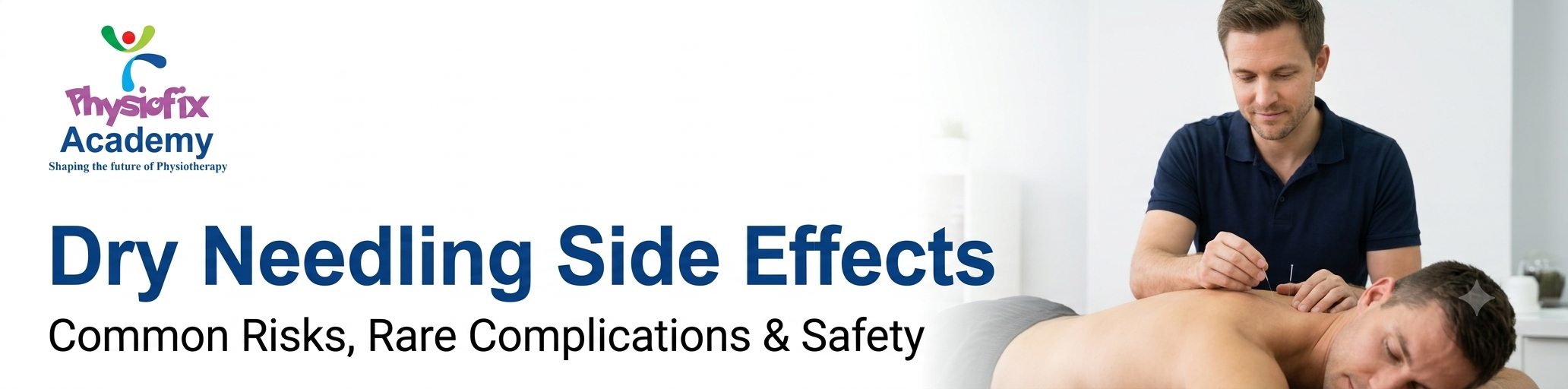
Side Effects and Adverse Events of Dry Needling: What Patients and Physiotherapists Should Know

Physiofix Academy

Mon, 26 Oct 2026

Side Effects and Adverse Events of Dry Needling: What Patients and Physiotherapists Should Know


```

Side Effects and Adverse Events of Dry Needling

What Patients and Physiotherapists Should Know By Dr. Sathish Babu Giridharan P.T

Dry needling is generally considered a relatively safe intervention when performed by an appropriately trained practitioner using appropriate clinical and infection-control procedures. However, because dry needling involves penetrating the skin with a needle, side effects and adverse events can occur.

The available literature shows an important distinction between minor, short-lived side effects and rare but potentially serious complications.

A 2026 systematic review and meta-analysis of 59 studies found that minor adverse events were commonly reported following dry needling, whereas major adverse events were uncommon. However, serious complications, although rare, are possible.

Common Side Effects

1. Post-Needling Muscle Soreness

Post-needling soreness is one of the most commonly reported side effects of dry needling.

Patients may experience localized muscle soreness, tenderness, or aching following treatment. The sensation can sometimes resemble the soreness experienced after exercise.

The soreness is generally temporary and may resolve over the following hours or days.

Mild soreness does not necessarily indicate that something has gone wrong. However, severe, progressively worsening, or unusual pain should be assessed rather than automatically attributed to normal post-treatment soreness.

For physiotherapists, patients should be informed beforehand that temporary soreness is a possible consequence of treatment.

2. Bleeding

Minor bleeding at the needle insertion site is common.

Because a needle passes through the skin and underlying tissues, it can occasionally contact a small blood vessel or capillary. A small spot of blood is usually a minor event and generally stops quickly with appropriate pressure.

In a prospective survey involving 20,464 dry-needling treatments, bleeding was reported in approximately 16% of treatments.

Another prospective study involving 7,629 treatments reported bleeding in approximately 4.65% of treatments.

These differences illustrate that reported rates vary between studies, partly because studies use different definitions and methods of recording adverse events.

3. Bruising or Hematoma

A small bruise may develop after dry needling when minor bleeding occurs beneath the skin.

Bruising is generally self-limiting and resolves without specific treatment.

In the prospective survey of 20,464 treatments, bruising occurred in approximately 7.7% of treatments.

Patients taking anticoagulant or antiplatelet medication, or those with a bleeding disorder, should inform their physiotherapist before treatment so that individual risk can be considered.

4. Pain During Needle Insertion or Treatment

Some patients experience a brief prick, aching sensation, or discomfort when the needle is inserted or manipulated.

In the large prospective survey, pain during dry needling was reported in approximately 5.9% of treatments.

A smaller prospective study reported pain during treatment in approximately 3% of treatments and pain after treatment in approximately 2.2%.

Pain perception varies between individuals and can depend on the anatomical region, technique, tissue being treated, and patient's expectations.

More pain does not necessarily mean a better treatment response.

5. Temporary Increase in Symptoms

Some patients may experience a temporary aggravation of their existing symptoms following treatment. This may include increased pain or tenderness in the treated region.

Temporary symptom aggravation has been reported in prospective studies and clinical trials.

If symptoms are severe, persistent, or substantially different from the patient's usual symptoms, further clinical assessment is appropriate.

6. Dizziness, Nausea, or Fainting

Some patients may experience dizziness, nausea, sweating, or fainting during or after needling.

These reactions can occur with needle-based procedures and may be associated with a vasovagal response, anxiety, pain, or other individual factors.

Drowsiness, headache, nausea, and fatigue have also been reported, although they appear to be less frequent than bleeding, bruising, and pain.

These should therefore be described as possible but less common reactions rather than as a routine physiological response to an "endorphin rush."


Rare but Potentially Serious Complications

Although most adverse events associated with dry needling are minor, the procedure is invasive and serious complications have been reported.

7. Pneumothorax

Pneumothorax is one of the most important serious complications associated with dry needling.

It can occur when a needle unintentionally penetrates the pleural cavity and allows air to enter the space around the lung.

The risk is particularly relevant when needling anatomical regions close to the thorax.

Symptoms that may indicate a pneumothorax can include:

  • Sudden chest pain
  • Shortness of breath
  • Difficulty breathing
  • Chest discomfort
  • Respiratory symptoms developing after treatment

A patient who develops significant respiratory symptoms following needling should receive prompt medical assessment.

For physiotherapists, this highlights the importance of detailed regional anatomy, appropriate needle depth and technique, patient positioning, clinical reasoning, and recognition of warning symptoms.

8. Nerve or Neurovascular Injury

Because nerves and blood vessels may be located close to muscles and other tissues being needled, incorrect needle placement can potentially result in injury.

Possible symptoms may include:

  • Sharp or electric-shock-like pain
  • Persistent altered sensation
  • Numbness
  • Tingling
  • Weakness
  • Significant or persistent pain

The risk is related to the anatomical region, technique, needle depth, practitioner training, and patient-specific anatomy.

9. Infection

Any procedure that penetrates the skin carries a potential risk of infection.

Infection following dry needling appears to be uncommon, but it has been reported.

Appropriate infection-control procedures are therefore essential, including hand hygiene, skin preparation, sterile single-use needles, and safe disposal of sharps.

10. Other Rare Serious Adverse Events

The literature contains case reports and reports of rare complications involving structures such as the central nervous system, major blood vessels, and other tissues.

These events are considerably less common than minor effects such as bleeding, bruising, and soreness.

Because these complications are rare, their exact incidence is difficult to estimate accurately. A major limitation of the current evidence is that adverse events have not been reported consistently across clinical trials.

How Common Are Dry-Needling Side Effects?

It is important not to quote a single percentage as though it applies to every patient or every dry-needling technique.

Different studies have reported substantially different rates because of differences in:

  • Definition of an adverse event
  • Needling technique
  • Anatomical region
  • Number of treatments
  • Practitioner experience
  • Method of data collection
  • Whether patients or practitioners reported the event

A prospective study of 20,464 treatments reported minor adverse events in 36.7% of treatments, with bleeding, bruising, and pain being the most common. Major adverse events occurred in fewer than 0.1% of treatments.

A 2026 systematic review of 59 studies found minor adverse events ranging from 0–48.15% per treatment, while major adverse events per treatment ranged from 0–0.43% across the included literature.

These figures should therefore be interpreted as ranges reported across heterogeneous studies, rather than as an individual's predicted risk.

What Patients Should Know Before Dry Needling

Before treatment, patients should tell their physiotherapist about relevant medical conditions and medications, particularly:

  • Anticoagulant or antiplatelet medication
  • Bleeding disorders
  • Current infection or skin problems
  • Previous problems with needles or fainting
  • Pregnancy, where relevant
  • Recent surgery or significant medical conditions

Patients should also understand the expected benefits, possible minor side effects, rare serious risks, and available treatment alternatives before giving informed consent.

What Physiotherapists Should Remember

For physiotherapists, dry needling should be approached as an invasive clinical procedure, not simply as another manual therapy technique.

Safe practice requires:

  • Appropriate professional training
  • Detailed knowledge of regional anatomy
  • Appropriate patient assessment
  • Recognition of contraindications and precautions
  • Informed consent
  • Appropriate infection-control procedures
  • Safe needle handling and disposal
  • Awareness of anatomical structures at risk
  • Recognition of adverse events
  • Appropriate emergency procedures
  • Accurate documentation

Training should include anatomical landmarks, cross-sectional anatomy, needle depth, safety protocols, and patient monitoring.

Bottom Line

For most patients, the adverse effects associated with dry needling are minor and temporary, with soreness, bleeding, bruising, and treatment-related pain among the most commonly reported.

However, dry needling is an invasive procedure and rare serious complications can occur. Pneumothorax, infection, and neurovascular injury are important complications for practitioners to understand even though they are uncommon.

The current literature also has an important limitation: adverse events have not been consistently defined or reported across studies. Consequently, published percentages should be interpreted cautiously.

For patients, the key message is that dry needling should be performed following an appropriate clinical assessment by a suitably trained practitioner, with informed consent and appropriate safety precautions.

Educational information only. This content does not replace an individual clinical assessment or medical advice.

0 Comments

Leave a comment