
What Does “Return to Sport” Actually Mean?
Tue, 29 Sep 2026

Follow the stories of academics and their research expeditions
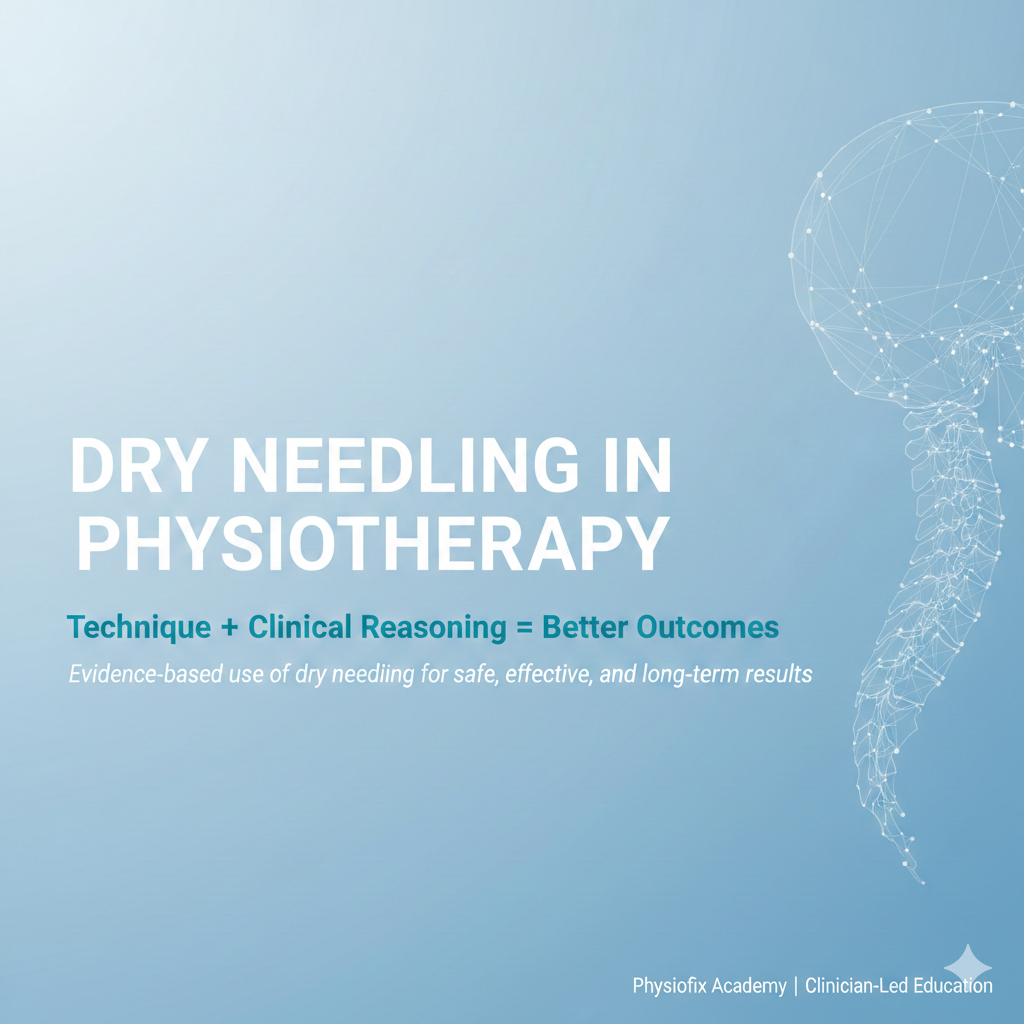
Dry needling has become one of the most popular techniques in modern physiotherapy. When used correctly, it can provide rapid pain relief, reduce muscle tone, and improve movement. However, like any powerful clinical tool, its effectiveness depends entirely on proper clinical reasoning and decision-making.
Research clearly shows that dry needling works best when it is not used in isolation, but as part of a structured physiotherapy approach. The paper highlights that dry needling primarily influences the neuromuscular system by reducing myofascial trigger point sensitivity, altering pain modulation pathways, and improving local tissue response. This makes it an excellent symptom-modulating technique, but not a complete treatment on its own.
From a physiotherapist’s perspective, dry needling should always be guided by:
A clear understanding of pathophysiology
Proper assessment and differential diagnosis
Identification of whether pain is driven by muscle, joint, neural, or movement dysfunction
Using dry needling without understanding the underlying cause may give short-term relief, but often leads to recurrence of symptoms. The paper emphasizes that combining dry needling with exercise therapy, movement retraining, manual therapy, and patient education leads to superior and longer-lasting outcomes.
For students and young clinicians, the key takeaway is simple:
Dry needling is not the treatment—it is a tool within a treatment plan.
At Physiofix Academy, we emphasize learning when to needle, when not to needle, and how to integrate it into a complete rehabilitation strategy. This clinical decision-making mindset is what transforms a technique into effective patient care.
Tue, 29 Sep 2026
Master physiotherapy from the comfort of your home with expert-led courses

Leave a comment